
Outcome Documents for
200 Years of Johnson v. M’Intosh (JvM): Indigenous Responses to the Religious Foundations of Racism
This website is the official archive of the outcome publications from the Henry J. Luce Foundation Grant Funded project “200 Years of Johnson v. M’Intosh (JvM): Indigenous Responses to the Religious Foundations of Racism". Professor Philip P. Arnold was the PI on this project which ran from 2022-2024. Project activities included a conference, podcasts, and various types of publications.
Summary #
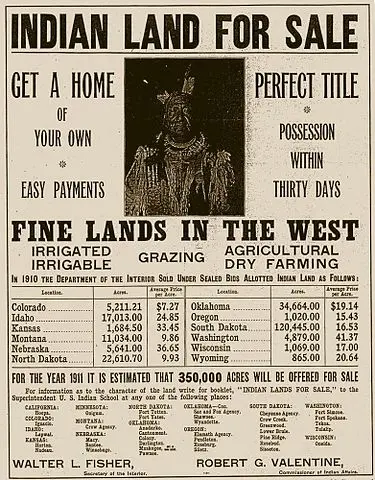
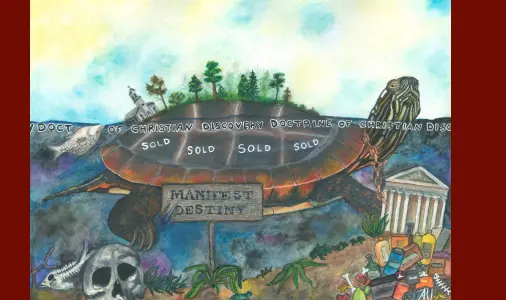
“200 Years of Johnson v. M’Intosh (JvM): Indigenous Responses to the Religious Foundations of Racism,” is a collaborative initiative made possible through relationships developed over 30 years between academic and Indigenous communities. At its core, the project seeks to interrogate and critically examine connections between the Doctrine of Christian Discovery (DOCD), the Catholic Papal Bulls that undergird the Doctrine, and the Doctrine’s pernicious influence on United States Indian Law today.
The 200th anniversary of JvM provides an excellent moment to challenge the theology and jurisprudence of DOCD and this critical Supreme Court decision. The project will deliver a range of digital products and written works combined with a host of public outreach activities to raise awareness about the harmful impacts of the DOCD and provide support for a global movement of Indigenous People’s that seek to repudiate it.

The Domination Translator Series: An Extended Essay on Various U.S. Supreme Court Rulings and Other Topics - Part 1
The Domination Translator Series is a comprehensive 15-part extended essay examining the historical and ongoing impact of the Doctrine of Discovery on United States legal jurisprudence. This introduction establishes the context and methodology for analyzing how the Doctrine of Discovery—a medieval principle of Christian supremacy used to justify European colonization—has been embedded in American constitutional law and continues to affect indigenous peoples and their rights.
 Steven T. Newcomb
Examining the Doctrine of Discovery in Religion and Indigenous Studies
Since the publication of Pagans in the Promised Land by Steven T. Newcomb (Shawnee/Lenape), scholarship on the Doctrine of Discovery has expanded significantly as a central issue in Indigenous law and politics. However, its implications remain underexamined in Religious Studies, Indigenous Studies, and legal scholarship. This article analyzes the matrix of enslavement, exploitation, and extraction that Newcomb identifies within settler-colonial systems and examines how scholars in Religious Studies, Legal Studies, and Indigenous Studies have engaged with the Doctrine of Discovery. Situating the Doctrine of Discovery within the broader analytical frameworks of enslavement, systemic violence, and religious imperialism reveals its deep entanglement with historic and legal structures of oppression. Examining its intersections with Religious Studies and postcolonial scholarship uncover how white Christian hegemony maintains its dominion and exposes the fragility of any perceived boundary between church and state.
 Adam DJ Brett
 Betty Hill (Lyons)
The Haudenosaunee (Iroquois) Great Binding Peace
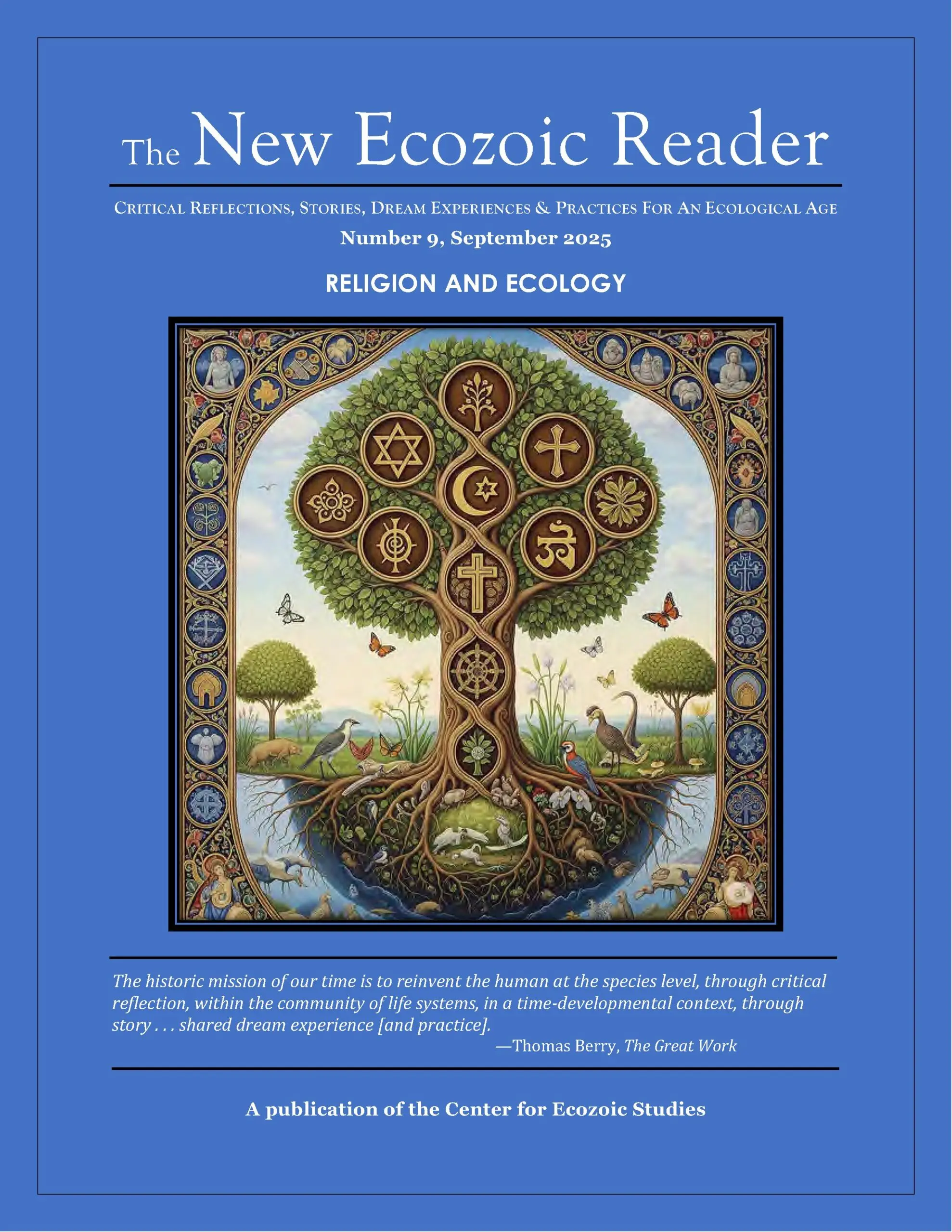
The Haudenosaunee (Iroquois) Great Binding Peace investigates the ancient democratic and spiritual traditions of the Haudenosaunee Confederacy and their relevance for addressing contemporary ecological and social crises. Arnold and Bigtree foreground the Great Binding Peace—a protocol rooted in matrilineal clan systems and a philosophy of reciprocal relationship with all beings—as a living tradition preserved by the Onondaga Nation and its role as the Central Fire of the confederacy.The essay challenges modern frameworks that have contributed to planetary degradation, arguing that many such systems originate from religious and colonial worldviews that undermine regenerative reciprocity. It traces the Peacemaker’s founding of the Great Binding Peace through figures like Jikonhsaseh, Hiawatha, and Tadodaho, emphasizing how these teachings embed peace, equity, and responsibility across human and non-human communities. The authors also highlight the Haudenosaunee influence on early Western democratic thought and critique the historical marginalization of Indigenous governance by colonial institutions. By advocating for a religious recalibration toward Indigenous values of mutual care and ecological balance, the essay suggests that revisiting the Great Binding Peace offers a transformative pathway for healing the rift between humanity and the natural world.
 Philip P. Arnold
 Sandra Bigtree
Religious Moral Suasion and Material Support for the Environmental Justice Movement
The Environmental Justice (EJ) movement in the United States is comprised of diverse groups of people with a variety of environmental grievances and interests coming together to obtain equal distribution of pollution burdens across communities, reduce environmental hazards, and ensure fair enforcement of laws and policies meant to safeguard the environment for all. The 17 Principles of Environmental Justice developed in 1991 at the First National People of Color Environmental Leadership Summit remains a touchstone document today
 Sarah Nahar
Healing the Sacred: The Fight to Restore Onondaga Lake and Honor Indigenous Land
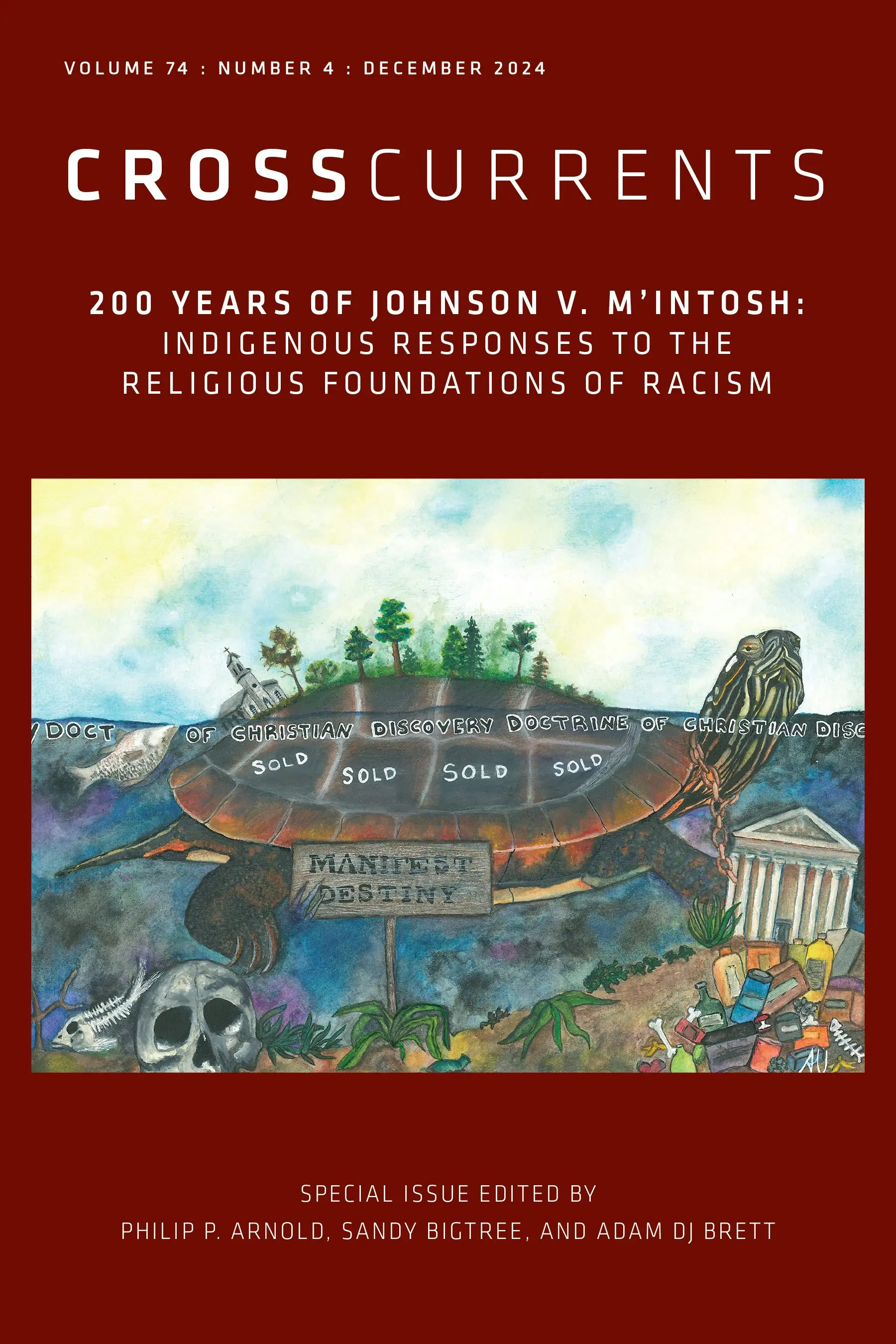
The Onondaga Nation is petitioning the Organization of American States (OAS) for land rights to Onondaga Lake, a notoriously polluted body of water in Central New York State. The Onondaga Nation is one of six nations of the Haudenosaunee Confederacy (Iroquois), and Onondaga Lake is the sacred site where Gayanashagowa, the Great Law of Peace, was established. As Keepers of the Central Fire, the Onondaga Nation bears the responsibility of maintaining unity and peace within the Haudenosaunee Confederacy. This article examines the history of the lake, its significance to the Haudenosaunee Confederacy, and the consequences of its desecration through industrial pollution. By juxtaposing Haudenosaunee teachings with the European Christian Doctrine of Discovery, we reveal how clashing worldviews led to violence, land theft, and genocide against the Haudenosaunee and other Indigenous Nations. Specifically, we apply Steven T. Newcomb’s Domination Code to analyze the settler-colonial justification for resource extraction, which left behind ecological and social devastation. We argue that returning Onondaga Lake to the Onondaga Nation is a vital step toward restoring this sacred place, bringing long-overdue healing to its people, the surrounding communities, and the natural world. The protection and restoration of Onondaga Lake is not only essential for its future but for the well-being of all. The restoration of Indigenous sacred spaces is a catalyst for meaningful social and ecological change.
Adam DJ Brett
Betty Hill (Lyons)
S06E01: Defending Mother Earth from The Doctrine of Christian Discovery
This podcast episode explores the Doctrine of Christian Discovery and its impacts on indigenous peoples particularly the Haudenosaunee Iroquois Confederacy It features perspectives from Onondaga Natio
 Philip P. Arnold
Sandra Bigtree
Adam DJ Brett
Before Religion
A poem is presented - It is a classic misinterpretation to refer to allNatives as always being in harmony withthemselves and their surroundings. As in, categorizing, denomination, caste, grade,order and grouping. With the above sentences in mind, I'll refer to only my people's past. We weren't always at peace or in harmony with ourselves and the earth. We struggled and fought with our own people. We suffered insult and reproach and turned toviolence in return for that insult and reproach.
Sawatis Frushell
Statement on the Doctrine of Discovery
The Episcopal Church's commitment to justice and equality is challenged by its historical complicity in the Doctrine of Discovery. The Episcopal Diocese of Central New York acknowledges its presence on unceded lands of the Haudenosaunee Confederacy and seeks to repent for past injustices. Through dialogue and advocacy, the church aims to heal divisions and honor the dignity of all individuals. Refuting the Doctrine of Discovery is fundamental to the faith of TEC, despite past failures to fulfill vows. The diocese is actively working to amend its past complicity in injustice, recognizing the complexity and harm caused. The story of Rev. David Pendleton Oakerhater serves as a reminder of this complexity, as the church continues its work for justice and peace while praying for redemption.
 Bishop Dede Duncan-Probe
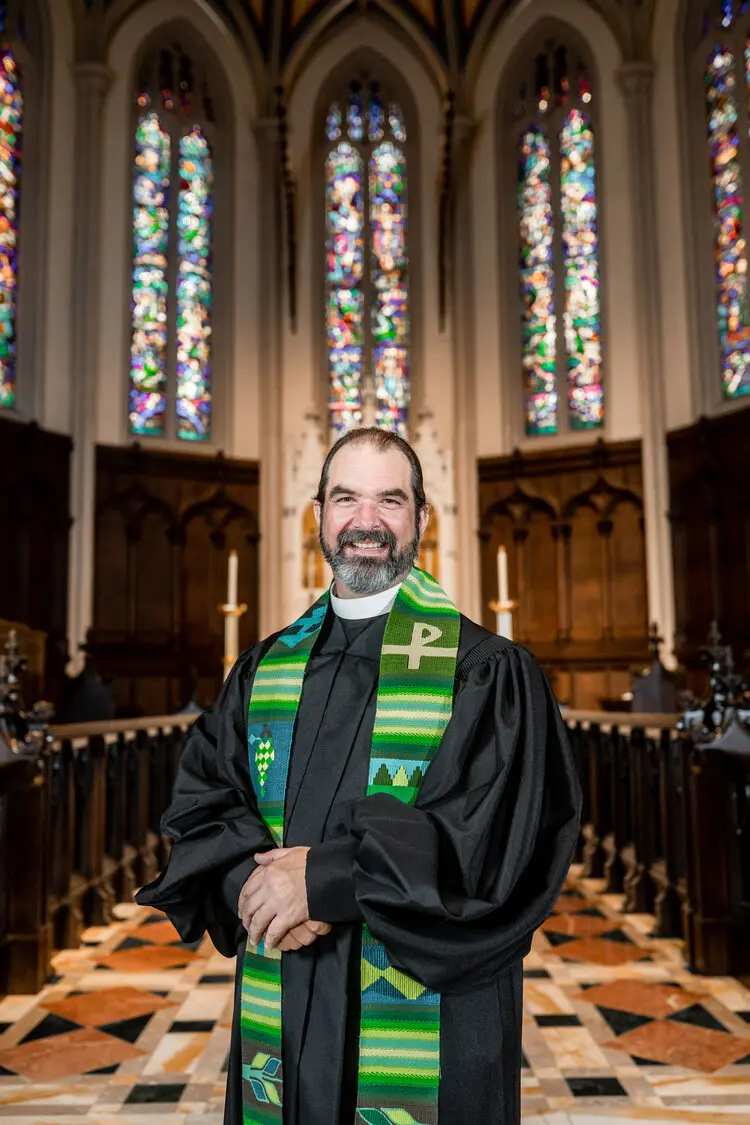
Cultivating a G.R.A.C.E. Mindset: Adaptive Leadership in the Evangelical Lutheran Church of America
The Evangelical Lutheran Church in America acknowledges and repents for its complicity in the harms of colonialism towards Native American and Alaska Native peoples. The church commits to undoing the ongoing evils of the Doctrine of Discovery and building right relationships with indigenous nations. The Upstate New York Synod confesses and repents for its complicity in the harm done to indigenous peoples and strives to strengthen anti-oppression efforts for justice and equity.
 Rev Lee M. Miller II
Joint Statement Of The Dicasteries For Culture And Education And For Promoting Integral Human Development On The "Doctrine Of Discovery"
The Catholic Church strives to promote universal fraternity and respect for the dignity of every human being, condemning acts of violence, oppression, and social injustice. While acknowledging past wrongs committed against indigenous peoples, the Church is committed to reconciliation, healing, and promoting the rights and cultural values of all individuals. The Church rejects the concept of the "doctrine of discovery" and upholds the inherent human rights of indigenous peoples, supporting principles outlined in the United Nations Declaration on the Rights of Indigenous Peoples.
Holy See Press Office