
Outcome Documents for
200 Years of Johnson v. M’Intosh (JvM): Indigenous Responses to the Religious Foundations of Racism
This website is the official archive of the outcome publications from the Henry J. Luce Foundation Grant Funded project “200 Years of Johnson v. M’Intosh (JvM): Indigenous Responses to the Religious Foundations of Racism". Professor Philip P. Arnold was the PI on this project which ran from 2022-2024. Project activities included a conference, podcasts, and various types of publications.
Summary #
“200 Years of Johnson v. M’Intosh (JvM): Indigenous Responses to the Religious Foundations of Racism,” is a collaborative initiative made possible through relationships developed over 30 years between academic and Indigenous communities. At its core, the project seeks to interrogate and critically examine connections between the Doctrine of Christian Discovery (DOCD), the Catholic Papal Bulls that undergird the Doctrine, and the Doctrine’s pernicious influence on United States Indian Law today.
The 200th anniversary of JvM provides an excellent moment to challenge the theology and jurisprudence of DOCD and this critical Supreme Court decision. The project will deliver a range of digital products and written works combined with a host of public outreach activities to raise awareness about the harmful impacts of the DOCD and provide support for a global movement of Indigenous People’s that seek to repudiate it.

Lyng v. Northwest Indian Cemetery Protective Association, 485 U.S. 439
In 1988 the United States Supreme Court declared constitutional the federal government’s development plan in the High Country, aboriginal homeland of the Karuk Nation of Northern California, sacred to them as well as to the Yurok and Tolowa Nations, and managed today by the US Forest Service as the Six Rivers National Forest among the Siskiyou Mountains. The Court admitted that “it is undisputed that the Indian respondents’ beliefs are sincere and that the Government’s proposed actions will have severe adverse effects on the practice of their religion.” Nevertheless, because the disputed area was on public land, the Court thought that the government should be allowed to manage its property in any way it saw fit, regardless of the severe adverse effects on the religious practice of the three Indigenous nations. A lot has been written about this case, Lyng v. Northwest Indian Cemetery Protective Association, but here I would like to focus on the Court’s reasoning, that this is government property and therefore cannot be protected as Indigenous sacred land with accordance with the religion clauses of the First Amendment to the US Constitution. Justice Sandra Day O’Connor, writing for the majority, declares that “whatever rights the Indians may have to the use of the area—those rights do not divest the Government of its right to use what is, after all, its land.
 Dana Lloyd
Animal Nations and the Doctrine of Discovery
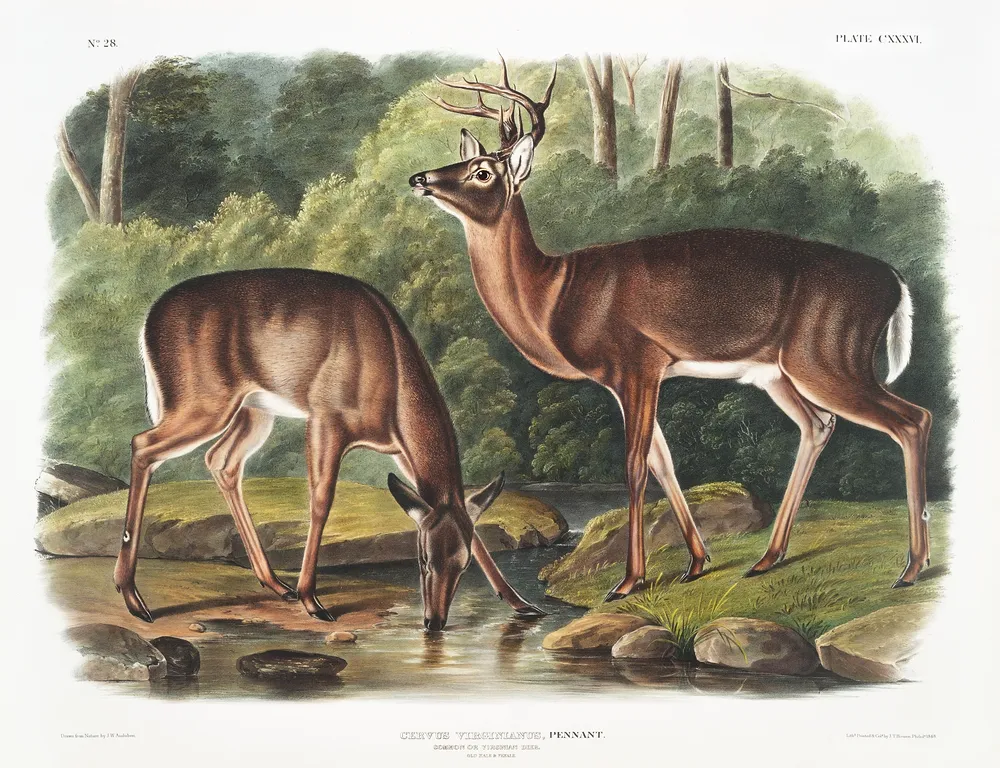
Democracy: 'Democracy didn’t come across on the Mayflower. Indeed not. Nor with the Niña nor Santa Maria. Certainly not. Democracy was here. It was in full flower. It was rampant. It was all over. All nations were free, and that includes the buffalo nation, that includes the fish nations and the nations of trees. They were all free.'
 Tracy Basile

Effectuating Renunciation: An International Effort to Provide a Pathway to Repudiate the Doctrine of Discovery
On September 8, 2021 the International Union for Conservation of Nature (IUCN) voted to renounce the Doctrine of Discovery by adopting Motion 048, now Resolution 119 for the Renunciation of the Doctrine of Discovery to Rediscover care for Mother Earth.
 Christopher Sudol
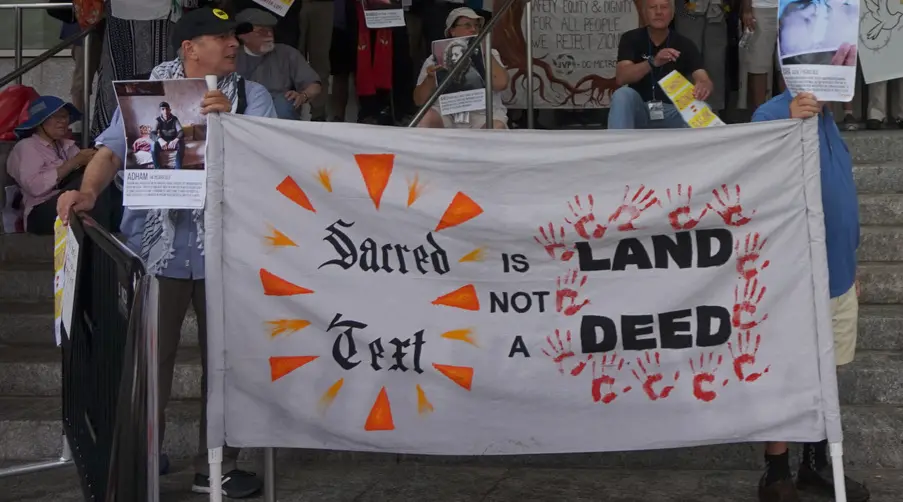
The Doctrine of Discovery and Christian Zionism
The Doctrine of Discovery (DoD) has a well-documented and researched connection to the colonization of Turtle Island. Its ideology, however, reaches far beyond the continent’s bounds. What is less researched is the DoD’s connection to European colonialism in the rest of the world.
 Jonathan Brenneman
.webp)
Manifest Destiny
Manifest Destiny is a nineteenth-century term designating an expansionist ideology grounded in the Doctrine of Christian Discovery and republican ideals that shaped the westward development of the United States through legal, religious, military, educational, and other cultural, structural, and systemic means; its effects are present in the twenty-first century.
 Robert Michael Ruehl

Christian Control Of Women And Mother Earth: The Doctrine Of Discovery And The Doctrine Of Male Domination
How did the world come to be? How did humans come to be? What is the origin of all living beings? The myth-history of who we are begins with the creation stories we tell. These stories guide us on the path to who we will become and how we understand ourselves and our relation to the planet and the other life on Earth. We settler colonialists have our origin story in the Christian Bible, the fiction that set our Western worldview on the path to Christian male domination of the earth and women. It set us spiritually, politically, economically and socially in a trajectory toward destruction. This is the best knowledge I can share with you after over 50 years of learning from Indigenous people, studying their history and examining my own settler colonialist world view.
 Sally Roesch Wagner

Superseding the Doctrine of Discovery: World Water One
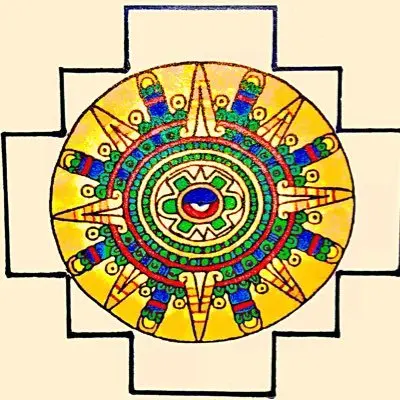
Ten years since the First Dismantling the Doctrine of Discovery International Conference held at Arizona State University West on April 1920, 2013, the Continental Commission Abya Yala will advance into the next cycle of INTENT and ENGAGEMENT towards the objectives and goals of the local-regional, continental-global initiative which has remained active across the continent throughout this most recent chapter of our collective history as Original Nations of Indigenous Peoples of the Great Turtle Island Abya Yala.
 Tupac Enrique Acosta

Settler Colonialism in Higher Education: Syracuse University and the Legacy of the Doctrine of Discovery (… and Onondaga Limestone)
In this article, I examine ways in which Syracuse University, a higher education institution located in Central New York, was founded from settler colonialism vis-à-vis the Doctrine of Discovery.
 Hugh Burnam

Uncovering the Invisible: The Doctrine of Discovery, its Impact on the Brazilian Indigenous Peoples, on the environment and how it continues to shape the Brazilian landscape today: English
Despite being a tool of colonization and imperialism worldwide, the Doctrine of Discovery’s importance and influence has been overlooked in Brazilian literature and studies. This article examines the Doctrine’s impact on the Brazilian Indigenous people and environment, highlighting the need to acknowledge and understand the effects and manifestations of the Doctrine of Discovery in Brazil. It explores intersections of the Doctrine with Indigenous rights and sovereignty. It argues that understanding the Doctrine is essential to move forward respectfully and sustainably with Indigenous people and the environment.
 Telma Alencar

The Regalian Doctrine: The Philippine Case
The Philippines has over 14-17 million remaining Indigenous peoples belonging to an estimated 110 ethnolinguistic communities (between 10-20% of the total population). It also boasts of some of the most progressive legislation in the world when it comes to protecting the rights of Indigenous Peoples. One such law is the Indigenous Peoples Rights Act (IPRA) of 1997 with the National Commission on Indigenous Peoples (NCIP) as its implementing arm.
 S. Lily Mendoza