

Vol. 25 No. 1 (Spring 2026): Challenging the Justifications of Domination through Law: Indigenous Resistance and the Undoing of Christian Empire
Part 2: Indigenous Resistance and the Undoing of Christian Empire
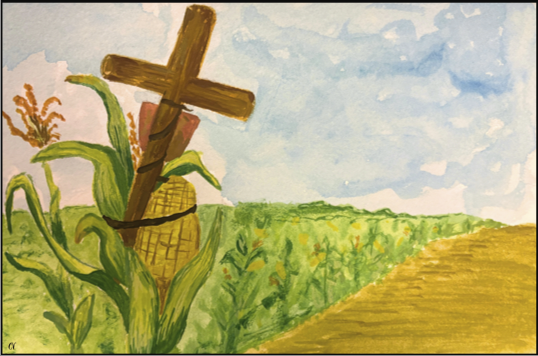
This issue gathers nine essays from JCRT 25.1 on federal Indian law, treaty interpretation, colonial jurisprudence, Indigenous sovereignty, and the ongoing work of overturning domination frameworks.
Published:
INTRODUCTION #
This second Outcome import from The Journal for Cultural and Religious Theory presents JCRT 25.1, Challenging the Justifications of Domination through Law: Indigenous Resistance and the Undoing of Christian Empire. The issue grows out of the 2023 Mapping the Doctrine of Discovery Conference at Syracuse University and serves as the law-focused companion to JCRT 24.2.
Where the first volume emphasized the religious justifications of conquest and domination, this issue turns directly to federal Indian law, treaty interpretation, colonial jurisprudence, and the legal afterlives of the Doctrine of Christian Discovery. Across these essays, legal analysis and personal reflection remain tied to Indigenous resistance, sovereignty, and the work of restoring right relations.
Together, the nine pieces in this issue trace how Christian supremacy and colonial legal structures continue to shape the present while also documenting concrete challenges to those structures in courts, communities, and Indigenous intellectual traditions.
Issue Contents
Peter d'Errico argues that U.S. anti-Indian law rests on Christian Discovery, and that challenging it exposes a metaphysical crisis in U.S. law today.
 Peter d'Errico
Jode Goudy recounts how the Yakama Nation built a historic amicus brief, connecting treaty rights, sovereignty, and opposition to Christian Discovery.
Jode Goudy
Joseph J. Heath shows how U.S. courts use Christian Discovery to deny Haudenosaunee treaty and land rights, and calls for its repudiation in U.S. law.
Joseph J. Heath
The International Law of Colonialism: The Doctrine of Discovery
Robert J. Miller traces how the Doctrine of Discovery became international law, enabling colonial claims over Indigenous land, rights and sovereignty.
Robert J. Miller
My Decades-long Inquiry Into the Doctrine of Christian Discovery and Domination
Steven Newcomb reflects on decades studying Christian Discovery, showing how law and language normalized domination over Native nations for centuries.
Steven T. Newcomb
Phillip Rodgers-Falk argues that native title and colonial sovereignty preserve Indigenous subordination through terra nullius and racial hierarchies.
Phillip Rodgers-Falk
An Appeal to the American People—Overturning “Federal Indian Law”
Steven J. Schwartzberg urges Americans to overturn Federal Indian Law by confronting the colonial assumptions that still shape U.S. jurisprudence now.
Steven J. Schwartzberg
Conclusion: Dismantling the Doctrine of Christian Discovery Cultivating Right Relations
The conclusion calls for decolonization beyond legal reform, centering Indigenous law, land return, and right relations to resist Christian Discovery.
Philip P. Arnold
Sandra Bigtree
Adam DJ Brett
A Postscript: Sovereignty is Still the Issue
This postscript argues Indigenous nations need full sovereignty, rejecting settler carve-outs and urging a healing return to precolonial lifeways now.
Adam DJ Brett
Betty Hill (Lyons)
Nethanial Belmont
On this Page
Information