

Vol. 24 No. 2 (Winter 2026): Challenging the Justifications of Domination Through Religion
Part 1: We Were Planting Corn and They Were Planting Crosses
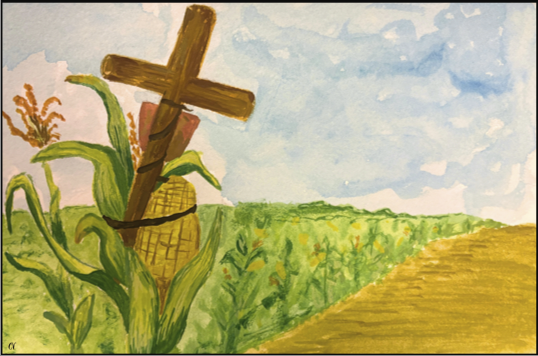
This issue gathers eighteen essays that emerged from conference collaborations examining the Doctrine of Christian Discovery, law, religion, and decolonial futures.
Published:
INTRODUCTION #
This is the first issue in the JCRT import for Outcome. The issue collects eighteen essays from volume 24, number 2, with canonical links pointing to JCRT archive pages.
Issue Contents
Wagner links church patriarchy and the Doctrine of Discovery to colonial violence, calling for Indigenous rematriation to restore women and the Earth.
 Sally Roesch Wagner
Baltic Religion: The Sacred Things
Trinkauskaite explores Baltic sacred traditions and sutartinės, linking domestic deities and revivalist practice to collective ethics beyond hierarchy.
Eglutė Trinkauskaitė
Ellen B. Cutler
Hindu Political Theology: Beyond Hindutva’s Political Monotheism
Somayajula reads Hindutva as political theology, showing how Hindu nationalism flattens religious diversity and urging a more inclusive Hindu identity.
Pranay Somayajula
Schools, Teachers, and Teacher Educators: Education Through the Disruption of White Supremacy
Radhakrishnan examines how U.S. schooling reproduces white supremacy and identifies teacher education strategies to disrupt curriculum, instruction, and policy.
Ritu Radhakrishnan
Preface to a special issue examining Christian Discovery’s role in white supremacy, law, and education, with decolonial paths grounded in Indigenous justice.
Philip P. Arnold
Sandra Bigtree
Adam DJ Brett
Nahar argues Doctrine of Discovery can build shared language between Black and Indigenous feminisms, strengthening solidarity against settler colonial power.
Sarah Nahar
“Engineering Marvel”: Towards Resisting the Affective Politics of Erie Canal Heritage
Nagle critiques Erie Canal heritage marketing, showing how engineered marvel obscures Haudenosaunee dispossession and calls settlers to affective resistance.
Danielle S. Nagle
Modrow shows how papal bulls transformed crusade theology into global colonial strategy, legitimizing Indigenous dispossession and imperial expansion.
Sebastian Modrow
Other Forms of Dwelling: A Dalit – Feminist Perspective
Lakshmi frames Dalit feminist values alongside Indigenous frameworks to show alternative forms of dwelling, relation, and resistance beyond colonial modernity.
Shrutika Lakshmi
Dismantling White Supremacy in the Classroom and Beyond
Jimenez shows criminal justice education must confront white supremacy by centering race, power and oppression to transform teaching and policies now.
Celinet Duran Jimenez
On this Page
Information