

Vol. 24 No. 2 (Winter 2026): Challenging the Justifications of Domination Through Religion
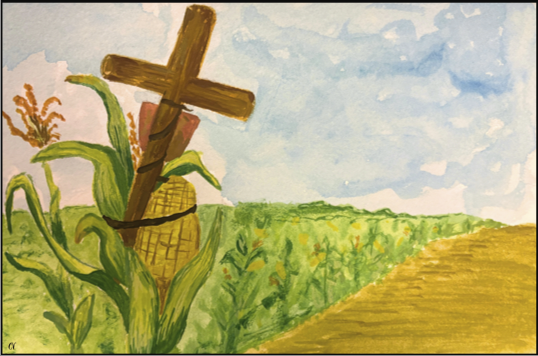
Part 1: We Were Planting Corn and They Were Planting Crosses
This issue gathers eighteen essays that emerged from conference collaborations examining the Doctrine of Christian Discovery, law, religion, and decolonial futures.
Published:
INTRODUCTION #
This is the first issue in the JCRT import for Outcome. The issue collects eighteen essays from volume 24, number 2, with canonical links pointing to JCRT archive pages.
Issue Contents
Preface to a special issue examining Christian Discovery’s role in white supremacy, law, and education, with decolonial paths grounded in Indigenous justice.
 Philip P. Arnold
Sandra Bigtree
Adam DJ Brett
Introduction to a global volume on Christian Discovery, linking law, religion, and pedagogy, with Indigenous sovereignty and decolonial justice today.
Philip P. Arnold
Sandra Bigtree
Adam DJ Brett
Wagner links church patriarchy and the Doctrine of Discovery to colonial violence, calling for Indigenous rematriation to restore women and the Earth.
Sally Roesch Wagner
Modrow shows how papal bulls transformed crusade theology into global colonial strategy, legitimizing Indigenous dispossession and imperial expansion.
Sebastian Modrow
Nahar argues Doctrine of Discovery can build shared language between Black and Indigenous feminisms, strengthening solidarity against settler colonial power.
Sarah Nahar
Callan traces how medieval English myths, crusade defeat, and Irish colonization shaped Christian white supremacy and fed the global Doctrine of Discovery.
Maeve Callan
The Chosen People at Grouse Mountain
Felese challenges conquest-based land values and shows Indigenous relational worldviews offer life-affirming alternatives to extraction and alienation
Wendy Felese
“Engineering Marvel”: Towards Resisting the Affective Politics of Erie Canal Heritage
Nagle critiques Erie Canal heritage marketing, showing how engineered marvel obscures Haudenosaunee dispossession and calls settlers to affective resistance.
Danielle S. Nagle
Deconstructing the Erie Canal: Three Lessons for its Next Century
In this bicentennial reflection on the Erie Canal, Renee Barry examines how celebratory public histories mask the canal's foundation in settler colonial violence on unceded Haudenosaunee land. Drawing on archival research, heritage tourism analysis, and museum narratives, the essay deconstructs myths of progress, civilization, and national destiny embedded in iconic commemorations such as the Wedding of the Waters. Barry argues that these narratives normalize environmental damage, erase Indigenous sovereignty, and recast genocidal dispossession as American achievement. The article links canal ideology to Christian dominance, European expansion, and the legal legacy of the Doctrine of Discovery, while also tracing how revivalist and reform movements reproduced similar hierarchies. Blending critical history with self-reflection, Barry calls for a different future in which Erie Canal memory is reoriented around Indigenous leadership, sacred relationships to place, and accountable ecological repair rather than triumphalist nostalgia. She urges institutions, educators, and visitors to confront inherited narratives and support decolonial stewardship in practice.
Renée Barry
Alencar traces how the Doctrine of Discovery shaped Brazil through church-backed silence, racial myths, and colonial violence, urging decolonial accountability.
Telma Alencar
On this Page
Information